

Table of Contents
- Why Professional Knives Perform Better: The Core Differences
- Forged vs. Stamped Knives: How Construction Changes Everything
- The Best Steel for Kitchen Knives: What Actually Matters
- Full-Tang Knife Benefits: Stability You Can Feel
- Blade Geometry and Edge Angle: The Science of the Cut
- Knife Balance and Ergonomics: Why Comfort Equals Control
- Performance by Skill Level: Are Professional Knives Overkill?
- Conclusion: Choosing a Knife That Earns Its Place
- Frequently Asked Questions
Last Updated: October 17, 2026
Why Professional Knives Perform Better: The Core Differences
Professional knives perform better because every part of the blade is engineered as a system: the steel, the heat treatment, the edge geometry, and the handle all work together to reduce the effort you spend on every cut. At SiliSlick®, we explain it this way: a kitchen knife is a lever, and professional knives are built to keep that lever sharp, balanced, and predictable through years of daily use.

The difference shows up fastest in the cut itself. A thin, hard, well-angled edge parts food instead of crushing it, so tomatoes stay intact and herbs don't bruise. That precision is why professional knives feel almost effortless next to a stamped household blade.
Below, we'll show you exactly what separates the two, and why the gap is bigger than most shoppers expect.
A quick overview before the details:
| Factor | Household Knife | Professional Knife |
|---|---|---|
| Construction | Often stamped from a single sheet | Often forged for denser steel |
| Steel | General-purpose stainless | High-carbon steel like VG-10 |
| Hardness | Lower, softer edge | Higher Rockwell hardness |
| Edge angle | Wider, more durable but blunt | Narrower, sharper, more precise |
| Handle and tang | Partial tang common | Full tang for stability |
| Lifespan | Replaced when dull | Maintained and sharpened for years |
Forged vs. Stamped Knives: How Construction Changes Everything
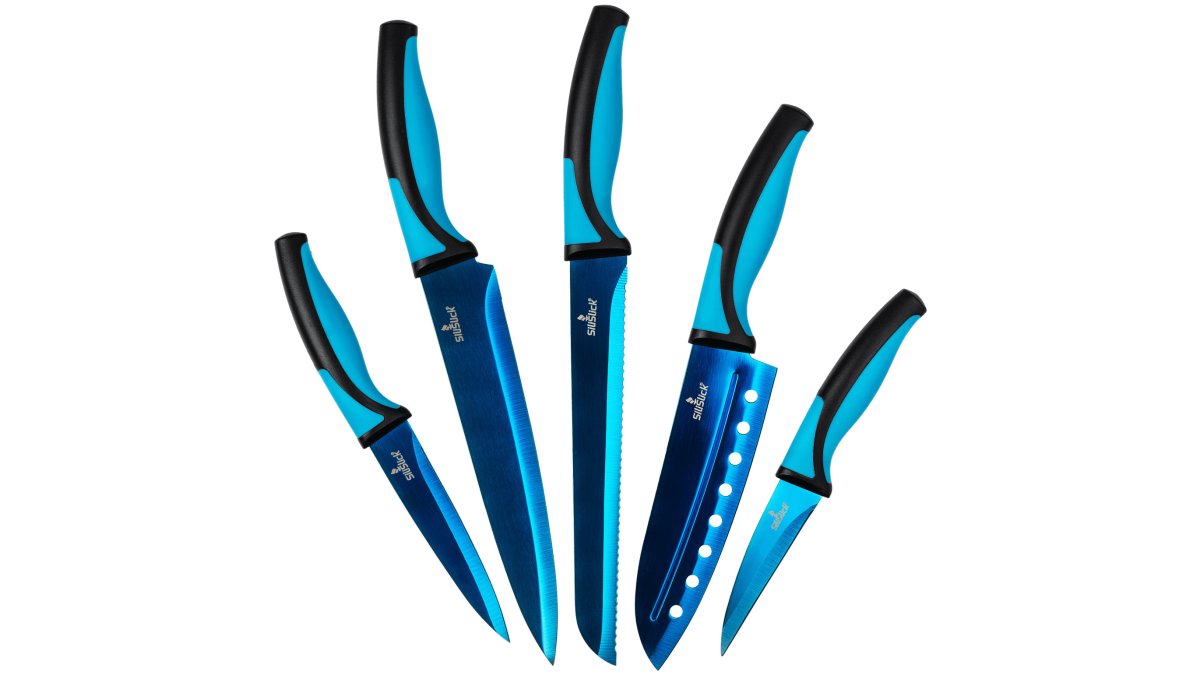
Forged and stamped knives differ mainly in how the blade is formed.
Stamped knives have real advantages: they're lighter, cheaper, and consistent from piece to piece. For a first apartment or a casual cook, that's often enough. The trade-off is heft. Lighter blades transmit more vibration into your hand and offer less momentum through dense foods.
Forged construction costs more because it takes more steps. What you get back is a knife that feels planted in your hand and holds its shape over years.
The Weight and Balance Trade-Off
Heavier isn't automatically better. A forged chef knife carries more mass behind the edge, so it does more of the work, but a blade that's too heavy tires your wrist during long prep sessions. Balance matters more than raw weight. A well-made knife puts the pivot point near the bolster, so the blade and handle feel like one unit.

Try this test before buying: rest the blade across your index finger. A balanced knife sits level, not tip-heavy or handle-heavy.
The Best Steel for Kitchen Knives: What Actually Matters
Most knife buyers are told to look for "high-carbon steel" or "VG-10" without learning why those labels matter at the cutting board.
Here is how the common kitchen steels stack up on those criteria:
| Steel type | Typical Rockwell hardness | Edge retention | Corrosion resistance | Maintenance demand |
|---|---|---|---|---|
| General-purpose stainless (e.g., 420J2, X50CrMoV15) | 54-56 HRC | Moderate; dulls after several weeks of daily prep | High; resists rust and staining | Low; dishwasher-safe on some models, tolerant of occasional neglect |
| High-carbon stainless (e.g., VG-10, SG2) | 60-62 HRC | High; holds a fine edge through months of home prep | Moderate; requires hand washing and immediate drying | Moderate; honing every few uses, professional sharpening 1-2 times per year |
| Carbon steel (e.g., 1095, White #2) | 58-61 HRC | Very high; takes a keen edge easily | Low; rusts without oil and immediate drying | High; must be dried and oiled after every use |
A blade rated at 62+ Rockwell hardness, like our Damascus VG10 Chef Knife, sits in the high-carbon stainless band: hard enough to resist rolling through dense vegetables, tough enough to avoid chipping under normal board contact. That balance is deliberate, not accidental.
How to Test Edge Retention at Home
You do not need a laboratory to compare steels. A repeatable home test uses a ripe tomato and a sheet of newspaper. Slice the tomato crosswise and note whether the skin parts cleanly or bruises. Then try to slice a single sheet of newspaper held vertically. A sharp edge glides through; a dull edge tears. Repeat the test after every 10 meals prepped. Most cooks find that a 54-56 HRC stainless blade begins tearing newspaper after two to three weeks of daily dinner prep, while a 60-62 HRC blade still slices cleanly at the six- to eight-week mark.
The Total Cost of Ownership Angle
Purchase price is only the first line item. A $30 stamped stainless knife that dulls every three weeks and gets replaced every two years costs more over a decade than a $79 high-carbon blade that is sharpened twice a year and lasts 10-15 years. Our Kitchen Knife Set with titanium-coated blades at $25 is a sensible entry point for occasional cooks, while the Damascus VG10 Santoku at $79 is built for daily prep and long service life.

ASM International's guide to tool steel properties explains how alloying elements change hardness and wear resistance in cutlery steels.
Full-Tang Knife Benefits: Stability You Can Feel
Full-tang knife benefits come down to stability and control. A full tang means the steel runs the entire length of the handle, so the blade and handle move as one piece.
Partial-tang knives can develop wobble at the joint over time. You may not notice it at first, but a loose handle changes how the blade tracks through food.
We build our full-tang sets around this idea, because a knife you trust is a knife you'll actually use. The grip stays consistent, the blade stays aligned, and long chopping sessions feel less like work.
Damascus VG10 Steel Santoku Knife Classic Wave →
Blade Geometry and Edge Angle: The Science of the Cut
Blade geometry and edge angle decide how a knife moves through food. A thinner blade with a narrower edge angle slices with less resistance, while a thicker blade with a wider angle trades sharpness for durability.
Here's the practical version. A narrower edge, like the 12-18 degree double bevel on our Damascus knives, glides through onions and fish. A wider edge survives contact with bones and frozen food better.
Geometry also covers the grind and the blade's thickness behind the edge. A knife that's thin right behind the edge cuts cleanly; one that's thick there wedges and splits food instead of slicing it.
Knife Balance and Ergonomics: Why Comfort Equals Control
Knife balance and ergonomics determine how long you can cook without fatigue. A balanced knife with a handle that fits your grip keeps your wrist neutral and your cuts controlled.
Handle material matters here. Pakkawood, which we use on our Damascus knives, resists moisture and keeps a comfortable feel even during long sessions. A secure grip means fewer slips and more confidence, especially when you're dicing something slippery.
Grip style changes the equation too. The pinch grip gives you the most control and is worth learning even if you've always held a knife by the handle.
Performance by Skill Level: Are Professional Knives Overkill?
Whether a professional knife is overkill depends less on your skill level than on your weekly prep volume and your willingness to maintain the blade. A beginner who cooks three meals a day will notice the difference in edge retention and control sooner than an experienced cook who preps once a week.
Here is a practical framework based on measurable criteria:
| User profile | Weekly prep time | Recommended knife features | Why it matters |
|---|---|---|---|
| Occasional cook (1-2 meals/week) | Under 1 hour | Stamped stainless, 54-56 HRC, wider edge angle (18-20° per side) | Tolerates infrequent honing and occasional dishwasher cycles; lower upfront cost |
| Regular home cook (4-6 meals/week) | 2-4 hours | Forged high-carbon stainless, 60-62 HRC, 15-18° edge | Edge lasts weeks between honings; balance reduces fatigue during longer sessions |
| High-volume home cook or entertainer (7+ meals/week) | 5+ hours | Full-tang forged, 61-62+ HRC, 12-15° edge, ergonomic handle | Edge retention and geometry pay off on every cut; full tang maintains stability through heavy use |
A beginner using a sharp, balanced knife is safer than one using a dull, handle-heavy blade because the knife does the work instead of the hand. An experienced cook notices the difference in edge geometry and steel hardness on every onion.
A Side-by-Side Test You Can Run
To see whether a professional knife earns its place in your kitchen, run a controlled comparison over one week. Dice one onion and slice one tomato with your current household knife, timing each task and noting whether the tomato skin bruises or the onion layers stay intact. Repeat with a professional blade like our Damascus VG10 Chef Knife. Most home cooks find the professional knife completes the same tasks in 10-20% less time with cleaner cuts, and the difference grows as the week progresses and the household blade dulls. That test costs nothing and tells you more than any spec sheet.
Where a Basic Set Still Makes Sense
Occasional cooks who mostly reheat or assemble meals, or anyone who will not hand wash and dry a blade, are better served by a basic stainless set. Our Kitchen Knife Set with titanium-coated blades at $25 covers those needs without demanding high-maintenance care. For cooks ready to step up, the Damascus VG10 Santoku at $79 delivers the edge retention and geometry that make daily prep feel easier.
For a deeper look at edge maintenance, the USDA's food safety guidance on kitchen equipment is a useful reference for keeping prep surfaces and tools clean.
Conclusion: Choosing a Knife That Earns Its Place
The gap between a household knife and a professional one comes down to steel, heat treatment, geometry, and balance, and none of those are cosmetic. A knife built well cuts cleaner, tires you less, and stays sharp longer.
If you're ready to upgrade, start with a single knife you'll use daily. Browse our Damascus VG10 Santoku or explore the full SiliSlick knife collection and pick the blade that fits how you actually cook.
Frequently Asked Questions
Do professional knives stay sharp longer than household knives?
Generally, yes. Professional knives typically use harder steels, like VG-10 with a Rockwell hardness of 62+, which resist dulling better than the softer stainless steel found in most budget sets. The edge geometry also plays a role; a thinner, more precisely ground edge cuts with less force, so it wears down more slowly. However, no knife stays sharp forever. You will still need to hone regularly and sharpen periodically, but a quality blade holds its edge through far more meals before needing attention.
Does full-tang construction make a knife perform better?
Full-tang construction means the blade steel runs continuously through the handle, which adds stability and reduces flex during heavy chopping. This creates a more balanced, durable tool that transfers force efficiently from your hand to the cutting edge. The full-tang knife benefits are most noticeable in tasks like breaking down squash or slicing dense proteins, where a partial-tang knife might twist or feel fragile. It also contributes to better balance and ergonomics, making long prep sessions less tiring.
What is the best steel for kitchen knives?
There is no single best steel, but high-carbon stainless steels like VG-10 offer an excellent balance of edge retention, corrosion resistance, and ease of maintenance for most home cooks. VG-10, used in many SiliSlick Damascus knives, takes a very sharp edge and holds it well thanks to its high hardness. For those who prioritize toughness over extreme sharpness, German stainless steels are a solid choice. The key is matching the steel to your cutting habits and how much maintenance you are willing to do.
Are professional knives overkill for a home cook?
Not at all. A professional-grade knife can make everyday cooking safer and more enjoyable, even if you are just prepping dinner for yourself. The improved balance, sharper edge, and comfortable handle reduce fatigue and make tasks like dicing onions or slicing chicken feel effortless. You do not need a full set of specialty knives; one well-made chef's knife or Santoku can replace several inferior tools. Think of it as an investment in efficiency and safety rather than a luxury.