

Table of Contents
- Why Titanium Coated Knives Need a Different Care Routine
- How to Clean Titanium-Coated Knives After Every Use
- Can Titanium-Coated Knives Go in the Dishwasher?
- How to Sharpen Titanium-Coated Knives Without Stripping the Finish
- Knife Sharpening Tools for Coated Blades
- Storage and Handling That Protect the Coating
- What to Do When the Coating Chips or Wears
- Conclusion: A Simple Maintenance Schedule
- Frequently Asked Questions
Last Updated: October 5, 2026
Why Titanium Coated Knives Need a Different Care Routine
Titanium coated knives are sold under a marketing phrase, not a single material. They carry very different surface layers, and the routine that protects one can damage another, so identify your coating first.
The Coating Types You Will Actually Encounter
Most titanium coated kitchen knives fall into one of these categories:
- Titanium-colored finish (decorative): A thin titanium oxide layer applied mainly for the rainbow, blue, gold, or black look. These are the thinnest and most easily scratched, offering modest corrosion resistance and almost no added edge hardness.
- Titanium nitride (TiN): A gold-colored PVD coating, typically 1-4 microns thick and roughly 2,000-2,500 on the Vickers scale. It resists wear well but is brittle and chips under impact.
- Titanium carbonitride (TiCN): A darker gray-to-black PVD coating, harder and more wear-resistant than TiN. Common on higher-end coated blades.
The takeaway: a decorative rainbow finish scratches easily, while a TiN blade takes routine use but chips if you pry with it.
Why the Coating Is the Fragile Part
Every coating is a thin film, microns, not millimeters, bonded to a steel core. It gives the blade its color, glide, and surface hardness, and it is the one part you cannot repair at home.
A plain stainless blade shrugs off a rough scrub, a soak, or a dishwasher cycle. A coated blade cannot. Once the coating wears through, the steel underneath is exposed to moisture and acid, and the color, glide, and hardness are gone in that spot.
How Care Changes by Coating Type
| Coating | Relative Hardness | Scratch Resistance | Heat Tolerance | Care Priority |
|---|---|---|---|---|
| Decorative titanium color | Low | Low | Low | Avoid all abrasion; hand-wash only |
| Titanium nitride (TiN) | High | Moderate | Moderate | Avoid impact and prying; hand-wash only |
| Titanium carbonitride (TiCN) | Very high | High | Moderate | Avoid impact; hand-wash only |
| Titanium aluminum nitride (TiAlN) | Very high | High | High | Avoid impact; hand-wash only |
| Diamond-like carbon (DLC) | Very high | High | Low-moderate | Avoid abrasives; hand-wash only |
What never changes: no dishwasher, no soaking, no abrasive scrubbers, prompt drying. What changes is how much routine use each coating tolerates before it shows wear.
The Steel Underneath Matters Too
The coating is only as good as the core beneath it. Coated kitchen knives typically use a stainless core, common grades include 3Cr13 and 5Cr15MoV. A few utility and dive knives pair a coating with a carbon steel core for edge retention.
- Stainless core: More forgiving if the coating is breached. Still rusts, but slowly, and usually stains rather than pits.
- Carbon steel core: Excellent edge, poor corrosion resistance. Once nicked, rust appears fast and the blade needs immediate drying and oiling.
If you do not know your knife's core, assume stainless unless the listing says otherwise, it is the norm for coated kitchen sets.
The Core Idea
Protect the coating, and the knife keeps its looks, edge, and non-stick glide for years, but that means something different for a decorative rainbow blade than for a TiCN-coated workhorse. Match your handling to the coating you own.
At SiliSlick®, we build our full-tang sets around titanium-coated stainless steel blades, so we think about this constantly. Here is the routine we recommend.

How to Clean Titanium-Coated Knives After Every Use
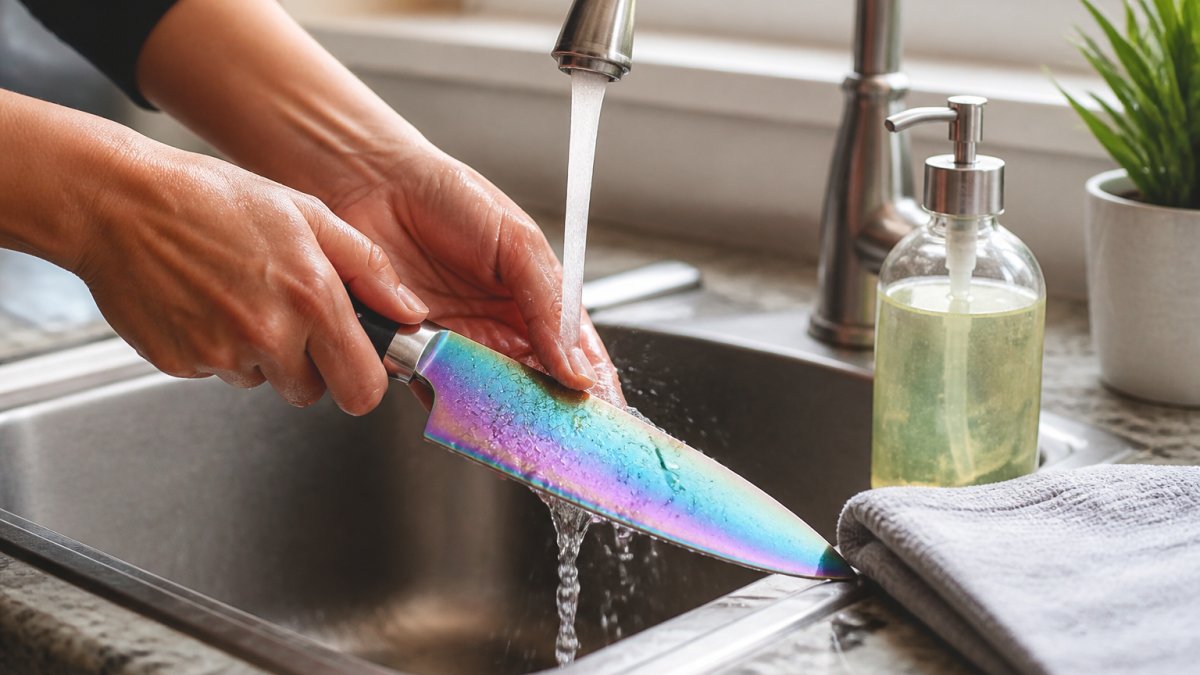
The short answer: hand-wash in warm water with mild soap, rinse, and dry right away. Skip the dishwasher, the soak, and the abrasive scrubber. Here is the step-by-step version.
Step-by-Step Hand-Washing Routine
- Rinse the blade under warm water right after use, before food dries.
- Add a drop of mild dish soap to a soft sponge or cloth.
- Wipe from the spine toward the edge, not back and forth across the blade.
- Rinse again until no soap or food residue remains.
- Dry immediately with a soft cloth, working from spine to edge.
- Air-dry for a minute on a rack before storing, just to be sure.
Never leave a coated blade in the sink or standing water, moisture drives corrosion on the underlying steel if the coating gets nicked.
Handling Sticky or Acidic Messes
Some foods are harder on a coated blade: citrus, tomatoes, vinegar, salty marinades, and sticky things like honey, dough, and cheese. Act fast:
- Rinse within a few minutes of cutting, acid left on the blade is the main risk.
- Use warm, not hot, water. High heat stresses the coating over time.
- Skip the soak. Even five minutes is longer than a coated blade needs.
A common mistake is reaching for steel wool or a scouring pad on a stubborn spot, that scratches the finish in seconds. Use a soft sponge and patience.
Can Titanium-Coated Knives Go in the Dishwasher?
No. Titanium-coated knives should never go in the dishwasher. High heat, harsh detergent, and tumbling against other dishes wear down the coating and dull the edge faster than anything else:
- High heat breaks down the titanium layer over repeated cycles.
- Abrasive detergent slowly eats at the finish.
- Banging against racks and other items chips the edge and coating.
The five minutes you save are not worth the damage. Hand-washing is the only safe option.
How to Sharpen Titanium-Coated Knives Without Stripping the Finish
Sharpening a coated blade is possible, but standard sharpening removes metal, and on a coated knife, that means removing coating too. The rule: sharpen only the cutting edge, never the flat of the blade.
Honing vs. Sharpening: What Coated Blades Actually Need
Honing realigns the edge. Sharpening removes metal to create a new edge. Coated blades need honing far more often than sharpening.
- Hone every few uses with a fine ceramic rod or honing steel.
- Sharpen only when honing stops working, usually every few months for home cooks.
- Use light pressure and match the existing angle.
Sharpen too aggressively and bare steel appears along the edge, that is the coating wearing away.
Kitchen Knife Set with Titanium-Coated Blades, Red Handles →
Maintaining a consistent angle on the rod preserves the integrity of the titanium layer, just as using the proper wooden cutting boards prevents the premature dulling that necessitates frequent sharpening.Knife Sharpening Tools for Coated Blades
Not every sharpener is safe for a coated knife. Pull-through carbide sharpeners and electric grinders remove too much material and strip the finish quickly. The safest tools:
- Fine ceramic honing rod, for weekly edge maintenance.
- Water stone (1000/6000 grit), for occasional full sharpening.
- Manual guided sharpener with fine settings, for consistency without guesswork.
Avoid diamond stones, they cut fast and eat through the titanium layer.
| Tool | Best For | Frequency | Coating Safe? |
|---|---|---|---|
| Fine ceramic rod | Weekly honing | Every few uses | Yes |
| Water stone (1000/6000) | Full sharpening | Every few months | Yes, with care |
| Guided sharpener | Consistent angles | As needed | Yes, on fine settings |
| Leather strop | Edge polishing | Weekly | Yes |
| Carbide pull-through | Quick fixes | Never on coated blades | No |
| Electric grinder | Heavy restoration | Never on coated blades | No |
Storage and Handling That Protect the Coating
Where and how you store a coated knife matters as much as cleaning. The coating scratches easily against other metal, so the goal is separation and dryness.
- Use the included sheath if your set came with one. Our SiliSlick® sets ship with hard-wearing safety sheaths for exactly this reason.
- Use a magnetic rack or knife block so blades do not touch.
- Never toss knives loose in a drawer. They will bang together and chip.
Handling matters too. Do not cut through bones or frozen food, or on glass and ceramic boards, they chip the edge and scratch the finish. Use wood or plastic.

What to Do When the Coating Chips or Wears
A chip, scratch, or dull gray patch is not automatically the end of the knife, but it changes how you use it. The response depends on where the damage is and how deep it goes.
First, Inspect the Damage Properly
Look at the blade under bright light and run a fingernail lightly across the affected area.
- Surface scuff: Dulled or lightly scratched but the color is continuous. Cosmetic, keep using the knife normally.
- Color change or rainbow fading: The titanium layer is thinning but not breached. Still protective; watch it.
- Visible bare steel: Silver metal shows through. The barrier is gone and the steel is exposed.
To confirm exposed steel, place a drop of water on the spot for a minute. A faint orange or brown tint means active corrosion, not a cosmetic mark.
What Exposed Steel Actually Means for Food Contact
The titanium-based coatings used on kitchen knives, titanium nitride, titanium carbonitride, and similar PVD finishes, are hard, inert, and food-safe when intact. Once breached, the concern shifts to the steel underneath.
- Stainless cores (3Cr13, 5Cr15MoV, and similar grades) resist rust reasonably well but still pit and stain if moisture sits on an exposed spot.
- Carbon steel cores corrode fast once exposed and will discolor food and pick up odors.
- Small flakes are the real food-safety question. A peeling coating can shed particles into food. If you can lift a flake with a fingernail, stop using that knife for food prep.
A tight chip with no lifting edges is usually fine for light tasks. If the coating is flaking, pull the knife from the kitchen rotation.
A Practical Response Plan
- Stop using the knife on acidic foods (citrus, tomatoes, vinegar, wine-based marinades) until you assess the spot, acid accelerates corrosion on exposed steel.
- Dry the blade completely after every use, no air-drying, no resting in a rack wet.
- Apply a thin coat of food-safe mineral oil to the exposed area after drying, then wipe off the excess. Mineral oil is inexpensive, tasteless, and food-safe.
- Keep honing lightly with a fine ceramic rod to maintain the edge without grinding away more coating.
- Reassign the knife to lighter prep, herbs, bread, soft vegetables, away from bones, frozen food, and squash.
- Recheck monthly. If the exposed spot is growing, the coating is failing and the knife is on its way out.
When to Contact the Manufacturer or Replace the Knife
You cannot re-coat a blade at home, the factory process uses a vacuum chamber and high-temperature deposition no consumer tool replicates. The decision comes down to three paths:
- Warranty claim: If the coating is failing across the blade, widespread flaking, peeling along the spine, or delamination without obvious abuse, and the knife is within its warranty window, contact the seller. Most quality coated knives carry a limited warranty against manufacturing defects, though normal wear and sharpening exposure are typically excluded.
- Continued use: A single small chip on an otherwise intact blade can give years of service with the care steps above. Many home cooks keep a chipped coated knife as a dedicated bread or utility blade.
- Replacement: If the coating is flaking into food, rust is spreading from an exposed spot, or damage covers more than a small fraction of the blade face, replace the knife.
Coating wear usually starts at the cutting edge, where sharpening removes material, and at the heel, where the knife contacts the board most often. Wear in either spot is a signal to adjust your sharpening frequency and cutting technique, not just the knife.
Conclusion: A Simple Maintenance Schedule
Here is the routine in one place:
- After every use: hand-wash, rinse, dry immediately.
- Every few uses: hone lightly with a ceramic rod.
- Every few months: sharpen carefully on a fine water stone.
No complicated steps, no special products, no hours of work, just consistent, gentle care.
At SiliSlick®, we design our titanium-coated knife sets for home cooks who want professional performance without professional upkeep. Our full-tang sets feature rainbow titanium-coated stainless steel blades, ergonomic non-slip handles, and rust-proof safety sheaths for safe storage.

Get started with SiliSlick® and keep your coated knives looking sharp and cutting clean for years.
Frequently Asked Questions
Can titanium-coated knives be sharpened?
Yes, but the method matters. Use a fine-grit whetstone and keep the angle shallow so you only touch the cutting edge. Aggressive electric sharpeners or coarse grinding wheels remove too much material and can strip the titanium coating. If you hone regularly with a ceramic rod, you will need to sharpen less often, which helps the coating last longer.
How should you clean a titanium-coated kitchen knife?
Hand-wash titanium coated knives with mild soap and warm water, then rinse thoroughly and dry immediately with a soft cloth. Do not soak them or leave them wet in the sink. For sticky residue like cheese or dough, wipe the blade with a damp cloth before washing. Avoid abrasive scrubbers and harsh detergents, which can scratch the coating and dull the finish over time.
Can titanium-coated knives go in the dishwasher?
No. Dishwasher heat, harsh detergents, and tumbling against other items can chip the coating, cause corrosion on the underlying steel, and dull the edge. Even on a gentle cycle, the moisture and high temperatures shorten the life of the blade. Hand-washing takes under a minute and keeps the titanium coating and cutting edge in good condition.
How should titanium-coated knives be stored?
Store titanium coated knives in a knife block, on a magnetic rack, or in the safety sheaths that come with sets like the SiliSlick Kitchen Knife Set. Never toss them loose in a drawer where blades can knock against each other. A dry, low-moisture spot prevents rust on the underlying steel, and edge guards protect both the coating and your fingers during storage.