

Table of Contents
- How to Care for Damascus Steel: Essential Steps
- How to Clean a Damascus Steel Knife After Every Use
- The Best Oil for Damascus Steel and How to Apply It
- How to Store Damascus Steel Knives Safely
- How to Sharpen a Damascus Steel Knife Without Damaging the Pattern
- Rust, Patina, and Troubleshooting Common Problems
- A Simple Maintenance Schedule for Damascus Steel
- Conclusion: Enjoy Your Damascus Steel for Years
- Frequently Asked Questions
Last Updated: October 14, 2026
How to Care for Damascus Steel: Essential Steps
Learning how to care for damascus steel comes down to three habits: wash it by hand right after use, dry it completely, and oil it often. Those steps take about two minutes a day. Skip them, and a beautiful blade turns dull and spotted fast.
At SiliSlick®, we build knives with 67-layer Damascus VG-10 steel, so we know exactly what these blades need. The wavy pattern you see is real layered steel, not a printed design. Those layers make the blade strong, but they also give moisture and acids more places to settle in.
Here is the good news: care is simple once you know the rules. Below, we walk through every step, from washing to storing to fixing small problems before they spread.
Why Damascus Steel Needs Special Care
Damascus steel is a blade made by folding and welding layers of high-carbon steel together. The layers create the pattern, and they also create tiny ridges across the surface.
Those ridges hold onto water and food acids. High-carbon steel also reacts to moisture faster than basic stainless. Leave a Damascus blade wet on the counter, and you may see a dull spot by morning.
The pattern itself deserves protection too. Scrubbing it hard or soaking it can wear down the contrast between layers. Treat the surface gently and the wave pattern stays crisp for years.
How to Clean a Damascus Steel Knife After Every Use
Clean your Damascus steel knife by hand with warm water, a little mild dish soap, and a soft sponge. Dry it right away with a clean towel. The whole job takes under two minutes.
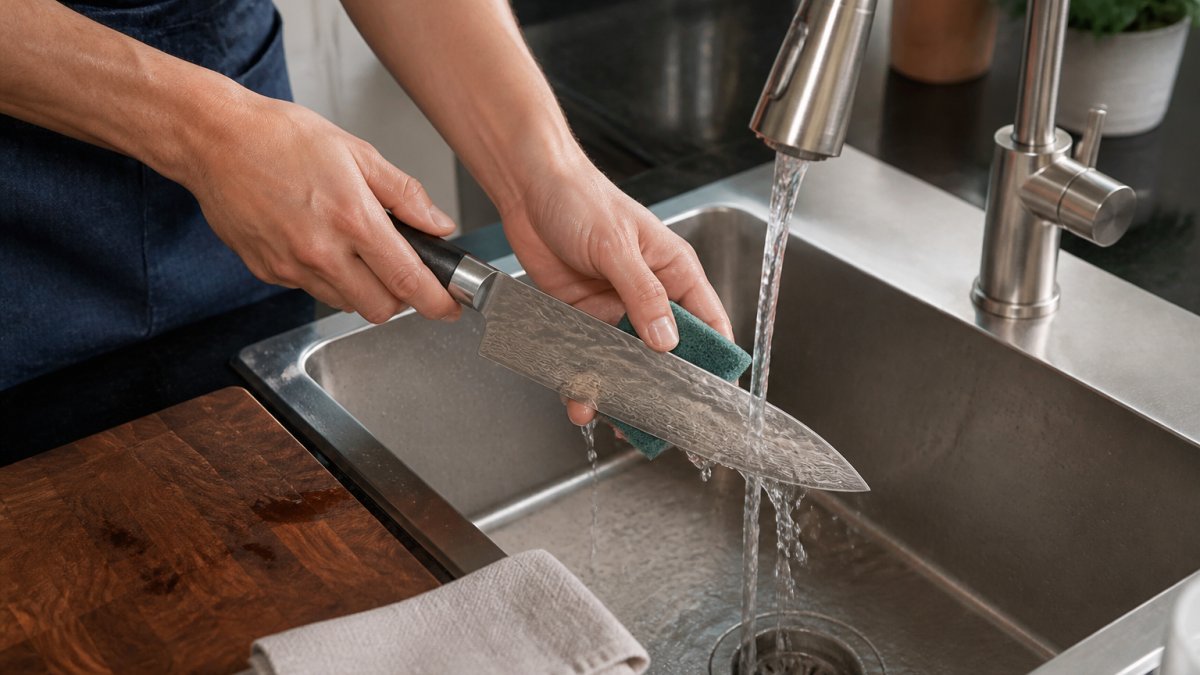
Step-by-Step Hand Washing
- Rinse the blade under warm running water.
- Add a drop of mild dish soap to a soft sponge.
- Wipe from the spine down to the edge, never back and forth across it.
- Rinse away all soap.
- Dry with a clean towel immediately.
- Let the knife air dry for a few more minutes before storing.
Wipe the handle too. Food residue and water collect where the blade meets the handle, and that spot is easy to forget. For a knife like our Damascus VG10 Steel Santoku Knife Classic Wave, the Pakkawood handle is sealed, but the joint where it meets the tang still traps moisture if you skip it.

What to Avoid: Dishwashers and Harsh Chemicals
Never put a Damascus knife in the dishwasher. The heat, the long soak, and the harsh detergent all work against the blade. Standing water sits on the steel for an hour or more, and that is when rust starts.
Also skip these:
- Bleach and chlorine cleaners
- Steel wool and scouring pads
- Oven cleaner or abrasive powders
- Long soaks in the sink
- Acidic cleaners like vinegar or lemon juice left on the blade
- Citrus-based degreasers
A soft sponge and mild soap do the whole job. Anything stronger damages the surface finish.
Handle, Sheath, and Joint Maintenance
Most care guides stop at the blade, but the handle and sheath need attention too. Wood handles can dry out and crack; composite handles can loosen at the rivets.
If you store your knife in a leather sheath, check it often. Leather can hold moisture against the steel, so dry the blade fully before it goes in.
For pivots and folding knives, a single drop of mineral oil at the pivot point keeps the action smooth. Work it in by opening and closing the knife a few times, then wipe away any excess.
Our Damascus VG10 Chef Knife with Hammered Blade has a hammered surface that helps food release and adds a little extra protection against sticking and moisture.

The Best Oil for Damascus Steel and How to Apply It
The best oil for Damascus steel is a food-safe mineral oil. It coats the blade, blocks moisture, and will not go rancid like some cooking oils can.
Choosing a Food-Safe Oil
Mineral oil is the standard pick for kitchen knives. It is cheap, tasteless, and safe around food. Camellia oil is another common choice for Japanese blades, though it costs more.
Avoid olive oil, vegetable oil, and butter. These break down over time and leave a sticky film that traps dust and bacteria.
How Often to Oil Your Blade
Oil your blade once a week with regular use. In humid weather or if you cook daily, oil it every few days. A dry climate or light use means once a month is fine.
To apply:
- Wash and dry the blade fully.
- Put a few drops of mineral oil on a soft cloth.
- Wipe the whole blade, both sides.
- Let it sit for a few minutes.
- Buff off the extra oil with a clean cloth.
A thin coat is all you need. A thick, dripping layer just collects dust.
How to Store Damascus Steel Knives Safely
Store Damascus steel knives dry, separate, and off bare metal. Moisture and contact are the two things that cause the most damage.
Good storage options:
- A magnetic strip on the wall, away from the stove
- A wooden knife block with slots
- A felt-lined drawer insert
- A blade guard or sheath for travel
Never toss a Damascus knife loose into a drawer. The edge knocks against other tools, and the pattern gets scratched. If you use a leather sheath, check it often. Leather can hold moisture against the steel, so dry the blade fully before it goes in.
Damascus VG10 Steel Santoku Knife Classic Wave →
Keep knives away from the sink, the dishwasher, and any damp spot. A dry drawer beats a wet counter every time.
Storage for Humid Climates and Long-Term Use
If you live in a humid climate, storage needs more attention. Humidity in the air can rust a high-carbon blade even if you never get it wet. Here is what helps:
- Use a dehumidifier or silica gel packets in the drawer.
- Oil the blade more often, every few days instead of once a week.
- Store knives in a sealed case with a moisture absorber for long-term storage.
- Avoid storing knives near windows, stoves, or dishwashers where steam collects.
For long-term storage, coat the blade with a slightly thicker layer of mineral oil, wrap it in a soft cloth, and place it in a dry, dark spot. Check it every month or two and re-oil as needed. A common pattern is that blades stored for months without oil develop light surface rust, especially in coastal areas.
Sheath and Handle Care
Leather sheaths look great but can trap moisture against the steel. If you use one, make sure the blade is completely dry before it goes in, and take the knife out every few weeks to check for spots.
Wood handles need occasional oiling to prevent cracking. A drop of mineral oil rubbed in once a month keeps them conditioned. Composite handles are lower maintenance but still benefit from a wipe-down after use.
Our Damascus VG10 Santoku Knife comes with a Pakkawood handle that resists moisture and cracking, making it a good choice for humid kitchens. Pair it with a felt-lined drawer insert or a magnetic strip, and you have a storage setup that protects both the blade and the pattern.

How to Sharpen a Damascus Steel Knife Without Damaging the Pattern
Sharpen a Damascus steel knife with a whetstone or a guided sharpener, and keep the angle steady. The pattern sits in the steel itself, so light sharpening will not erase it. Heavy grinding can.
A few rules keep the blade and the pattern in good shape:
- Match the original edge angle, which is often 12-18 degrees per side on Japanese-style blades.
- Use light pressure and let the stone do the work.
- Sharpen only when the knife actually feels dull.
- Hone between sharpenings to keep the edge aligned.
If you are not sure about your angle, practice on an old knife first. A guided sharpener takes the guesswork out of it.
For a blade like our Damascus VG10 Steel Santoku Knife Classic Wave, the 62+ Rockwell hardness means it holds an edge a long time. You will sharpen it far less often than a cheap stainless knife.
Rust, Patina, and Troubleshooting Common Problems
Rust and patina are not the same thing. Patina is a thin, dark layer that forms on high-carbon steel over time. It actually protects the blade. Rust is orange, rough, and flaky, and it eats into the steel.
How to tell them apart:
- Patina: even, dark gray or blue, smooth to the touch
- Rust: orange or red, rough, often in spots or patches
For light rust, rub the spot with a soft cloth and a little mineral oil. For heavier rust, use a fine rust eraser, then re-oil the blade. If you see pitting, the damage is permanent, so focus on stopping it from spreading.
Fingerprints cause spots too. The oils on your hands react with high-carbon steel. Wipe the blade after handling, especially if you will store it for a while.
A Simple Maintenance Schedule for Damascus Steel
A short routine keeps a Damascus blade in top shape. Here is what we recommend:
| Task | How Often | Time Needed |
|---|---|---|
| Hand wash and dry | After every use | 2 minutes |
| Wipe down after handling | As needed | 30 seconds |
| Oil the blade | Weekly to monthly | 2 minutes |
| Hone the edge | Every 2-4 uses | 1 minute |
| Full sharpen | Every few months | 15-20 minutes |
| Check storage spot | Monthly | 1 minute |
Stick to this and your knife stays sharp, bright, and free of rust. Most people find the daily steps become automatic within a week.
Our Damascus VG10 Chef Knife with Hammered Blade has a hammered surface that helps food release and adds a little extra protection against sticking and moisture. It is a good fit for anyone who wants one knife that does most jobs.
Conclusion: Enjoy Your Damascus Steel for Years
A Damascus blade rewards a little attention. Wash it by hand, dry it right away, oil it often, and store it dry. That routine protects both the edge and the pattern you fell in love with.
If you are ready to upgrade your kitchen, our Damascus VG10 Santoku Knife brings 67 layers of VG-10 steel, a Pakkawood handle, and a lifetime guarantee against manufacturing defects. It is built to perform and made to last.
Shop with SiliSlick® and give your kitchen a knife worth caring for.
Frequently Asked Questions
What oil do you put on Damascus steel?
Use a food-safe oil like mineral oil, camellia oil, or a specialty knife oil. These protect the blade from moisture without leaving a toxic residue. Apply a thin coat with a soft cloth after cleaning and drying. Avoid cooking oils like olive oil because they can turn rancid and become sticky over time.
Can Damascus steel knives go in the dishwasher?
No. Dishwashers expose blades to high heat, harsh detergents, and prolonged moisture, which can cause rust, pitting, and damage to the handle. Always hand wash your Damascus steel knife with mild dish soap and warm water, then dry it immediately with a clean towel to keep the blade and pattern in good condition.
How often should you oil a Damascus steel blade?
Oil your Damascus steel blade after every wash and dry, especially if you use it daily. For knives stored long-term, reapply a thin layer of food-safe oil every one to two months. If you live in a humid climate, check more often and oil whenever the blade looks dry or dull.
Does Damascus steel need special care compared to regular stainless steel?
Yes. Damascus steel often contains high-carbon layers that are more prone to rust and oxidation than standard stainless steel. It needs prompt hand washing, thorough drying, regular oiling, and safe storage. With consistent care, a quality Damascus knife like the SiliSlick Damascus VG10 Santoku Knife keeps its sharp edge and striking pattern for years.